Compare Side by Side
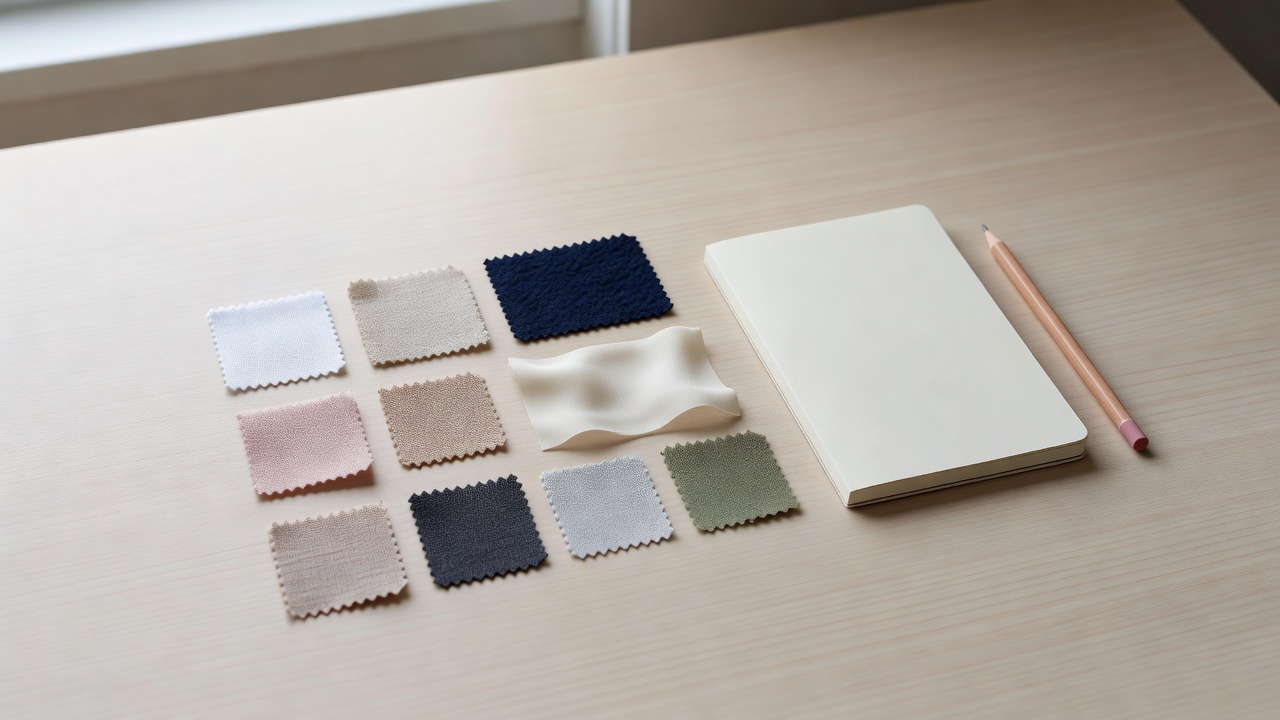
Place two or more swatches next to each other to highlight differences in texture, weight, and color under the same light conditions.
A structured approach to observing fabric samples. These steps are a general starting point — not a substitute for hands-on testing with your actual materials.
Step-by-Step
Small fabric samples can help you observe how a material feels, folds, stretches, and reacts to handling. These observations do not guarantee final project performance, but they can support better preparation.
Place the swatch on a flat surface under good lighting. Take time to look at it carefully.
Gently pull the fabric in different directions to observe its elasticity.
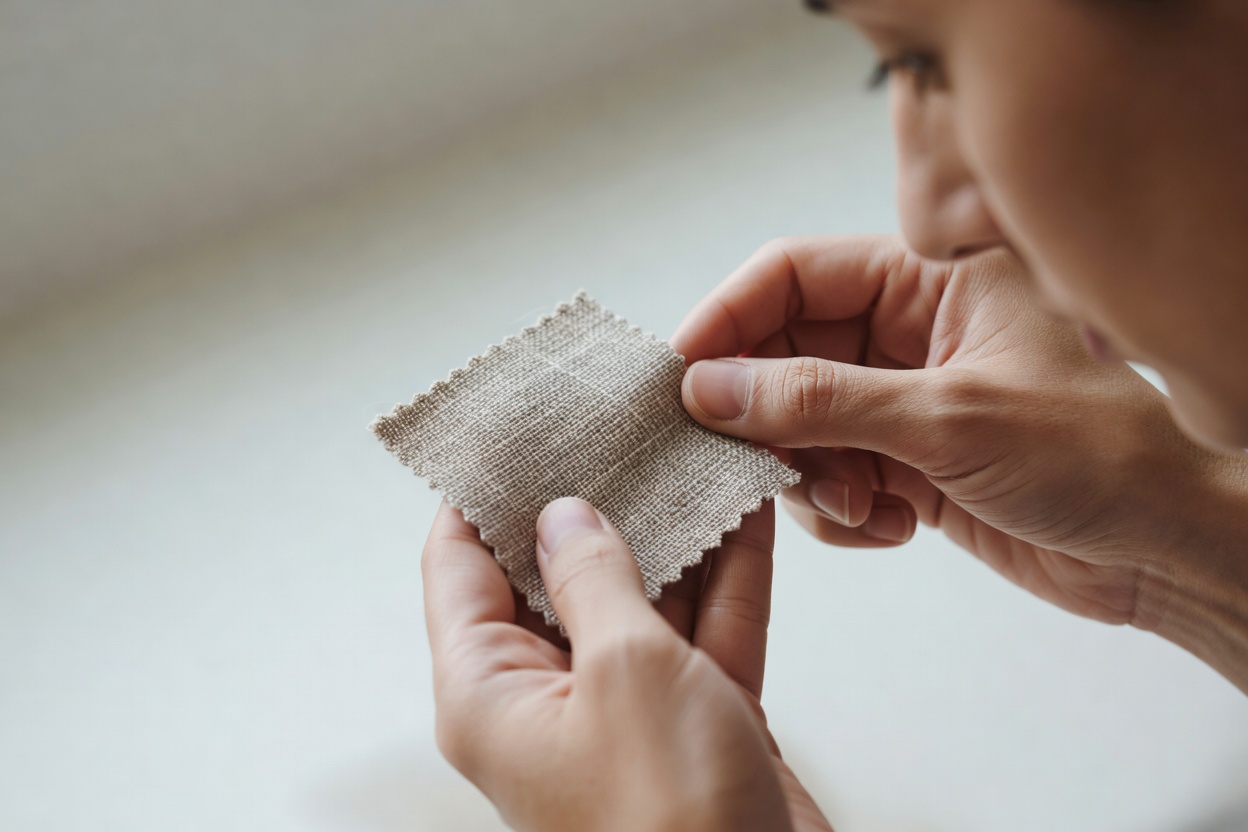
Pick up the swatch and feel how it falls from your hand.
Identify the grain line and direction of threads if the fabric is woven.
Write a few brief observations while the swatch is in your hands.
A swatch observation is a starting point, not a final decision.
These steps describe a general observation process. Results will vary depending on fabric type, finishing, and individual projects. This guide does not substitute for professional advice or supplier testing data.
Additional Tips
These are general suggestions for developing a more consistent approach to swatch evaluation over time.
Place two or more swatches next to each other to highlight differences in texture, weight, and color under the same light conditions.
Observe fabric under the same light source each time to reduce visual differences caused by lighting variation.
Attach a small tag to each swatch with the fabric name, supplier reference, and the date you received or tested it.
Storing labeled swatches in a folder or binder lets you revisit past observations and compare them with new samples over time.
If you are unsure about something you observe, record it as a question. Uncertainty is a useful starting point for further inquiry.
Having a second person observe the same swatch can surface observations you may have missed, especially for tactile qualities.
Getting Started
You do not need special equipment to begin observing fabric swatches. The following simple items can support a more organized approach: