Single Jersey
A basic knit with a smooth face and a looped back. Commonly used in t-shirts. Generally stretches more in the width than the length.
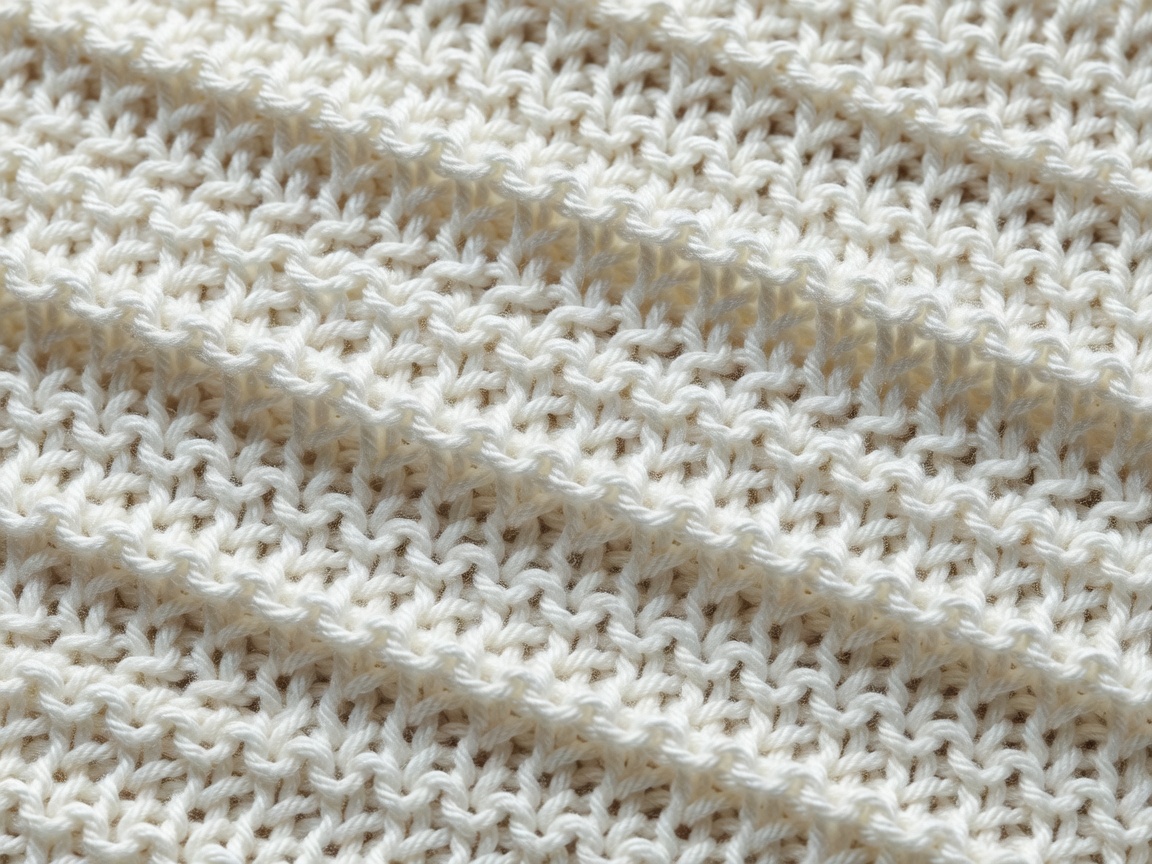
Fabrics constructed from interlocking yarn loops rather than woven threads. Knit structures tend to have inherent stretch and flexibility that differs from woven equivalents.
Structure Overview
Unlike woven fabrics — where threads interlace at right angles — knit fabrics are formed by loops of yarn that interconnect with each other. This loop-based structure is what gives knit fabrics their characteristic flexibility and stretch in one or more directions.
Knit fabrics can be made from almost any fiber — cotton, wool, polyester, nylon, and blended yarns are all commonly used. The fiber choice affects how the knit feels, how it stretches, and how it responds to washing and wear.
| Construction method | Interlocking loops |
| Stretch direction | Often in both length and width; varies by type |
| Common fibers | Cotton, polyester, wool, nylon, blends |
| Woven equivalent stretch | Generally lower; more rigid structure |
| Edge behavior | Many knits curl at cut edges |
| Fraying tendency | Lower than woven fabrics in most cases |
Knit fabric properties vary significantly by construction type, fiber, and weight. Specific products should always be tested before use in a project.
Knit Types
The following are some commonly discussed knit fabric types. Each has distinct structural and handling characteristics.
A basic knit with a smooth face and a looped back. Commonly used in t-shirts. Generally stretches more in the width than the length.
Two layers of jersey knitted together. Generally more stable and less prone to curling than single jersey. Often slightly thicker.
Alternating columns of knit and purl stitches create a distinctive ribbed texture. Rib knits tend to have high horizontal stretch and recovery.
A looped structure on one side with a smooth face. Often used in casual wear fabrics. The loop structure gives it a recognizable texture.
A knit base fabric with a raised, brushed surface. The pile finish adds visual bulk and affects how the fabric feels against the hand.
A double-knit fabric with a firm, stable structure and relatively low stretch. The surface is typically smooth on both sides.
Swatch Observations
Pull the swatch horizontally and vertically. Note which direction has more stretch and how quickly it recovers.
Cut edges of single jersey often curl toward the face. Observe whether your swatch edges curl when unsupported — this is a normal knit characteristic.
Look at the reverse of the swatch. Many knit fabrics show the loop structure clearly on the back, which differs from the face appearance.
Hold a stretched position for a few seconds, then release. Note whether the fabric fully recovers or shows signs of distortion.