Surface & Sheen
Many polyester fabrics have a noticeable sheen or smooth surface finish. Some types are deliberately textured or given a matte surface through finishing.

A widely used synthetic fiber produced from petroleum-derived polymers. Polyester fabrics vary greatly depending on construction, weight, and finishing.
Fiber Overview
Polyester is a synthetic fiber created from a type of polymer known as polyethylene terephthalate (PET). It is manufactured into continuous filaments or short staple fibers, which are then spun into yarn and woven or knitted into fabric.
Because polyester is a manufactured fiber, its properties can be engineered to a degree that natural fibers cannot. This means polyester fabrics vary enormously — from very fine, silky types to heavy, structured varieties.
| Fiber source | Synthetic (petroleum-derived polymer) |
| Fiber type | Thermoplastic polyester |
| Typical feel | Varies widely; can be smooth, silky, or textured |
| Moisture behavior | Generally low moisture absorption |
| Color retention | Often noted for stable color over time |
| Stretch behavior | Variable; depends on construction |
These are general observations. Polyester fabric behavior varies significantly by product, construction, and finishing. Always test a physical sample before project use.
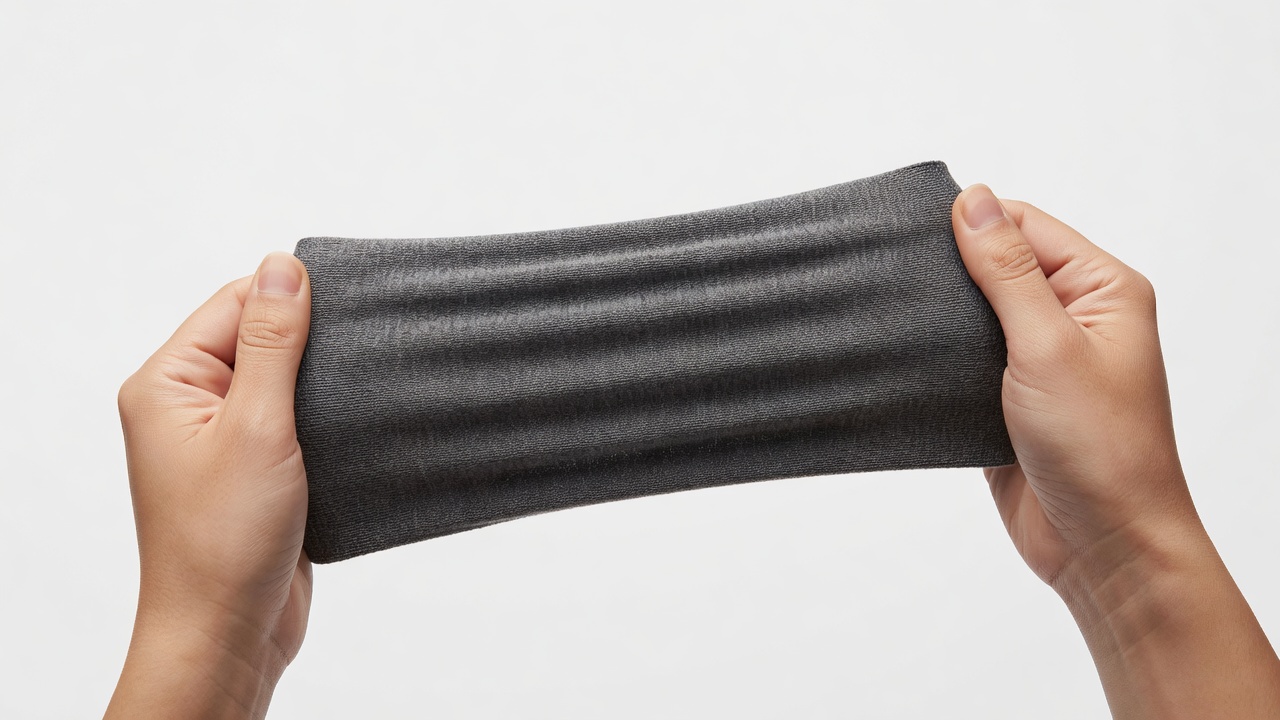
What to Notice
Polyester's synthetic origin means its properties can differ noticeably from natural fibers. These observation points are general starting points for swatch evaluation.
Many polyester fabrics have a noticeable sheen or smooth surface finish. Some types are deliberately textured or given a matte surface through finishing.
Polyester tends to generate more static electricity than natural fibers. You may notice the swatch clinging to surfaces or your hand when rubbed.
Fine polyester can drape softly, while heavier constructions may hold more structure. Compare several samples to notice the range.
Polyester often relaxes from creases more than natural fibers. Fold and hold the swatch briefly, then release and observe how it recovers.
Compare a polyester swatch to a cotton swatch of similar visual density. Polyester often feels lighter for a given apparent thickness.
Rub the fabric lightly between your fingers to feel the surface texture. Note whether it feels smooth, slightly rough, or has a grainy texture.