The Diagonal Line
Look at the fabric surface at an angle. You should see a clear diagonal rib pattern running from lower left to upper right (in most denim). This is the twill weave.
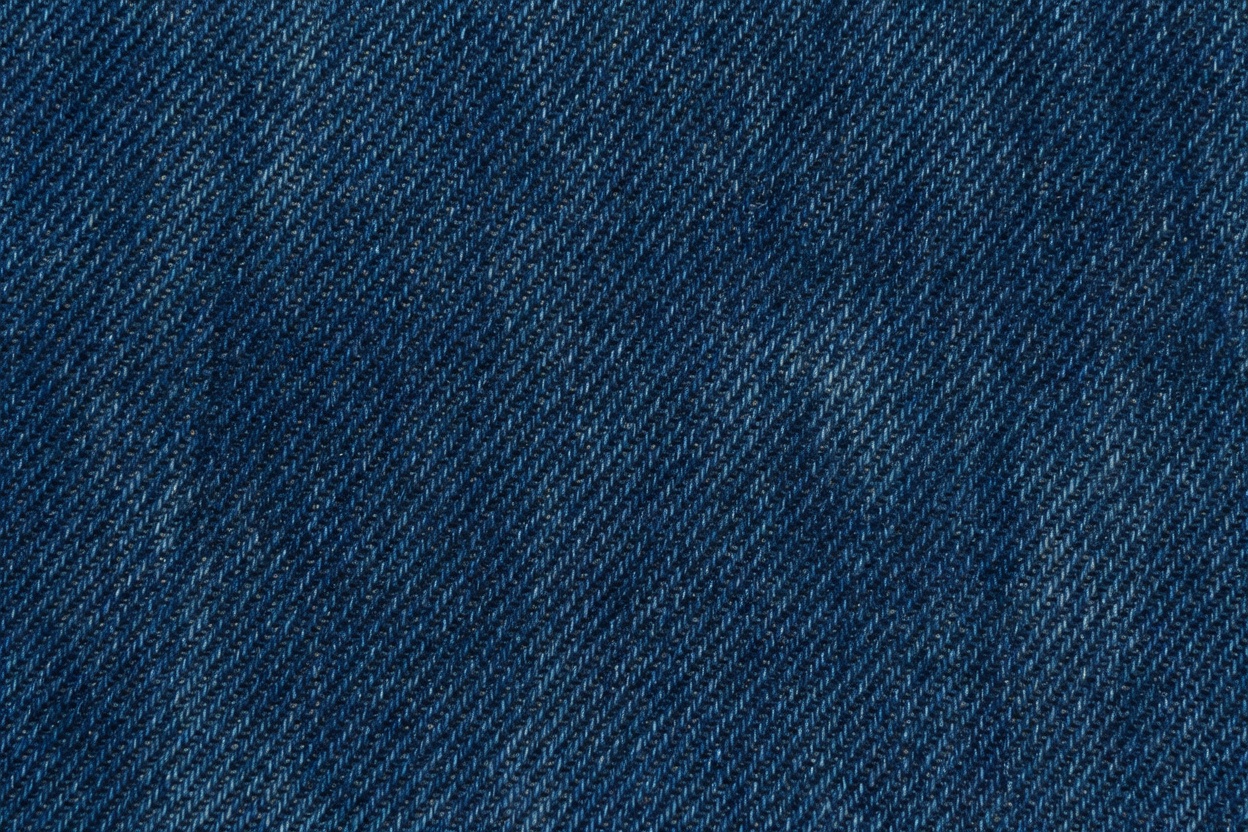
A twill-woven fabric typically made from cotton. Denim is recognizable by its diagonal weave pattern and is generally heavier in weight than many other cotton fabrics.
Fabric Overview
Denim is a sturdy cotton twill textile in which the weft thread passes under two or more warp threads. This creates a distinctive diagonal ribbing pattern on the fabric surface. Traditional denim uses indigo-dyed warp threads and undyed weft threads, though many modern denims use varied dye combinations.
Denim weights are often described in ounces per square yard (oz/yd²). Lighter denims (around 5–8 oz) behave differently from heavier weights (12 oz and above). This range means denim swatches can vary considerably in feel and drape.
| Weave type | Twill (typically 3×1 or 2×1) |
| Primary fiber | Cotton (sometimes blended with elastane or polyester) |
| Weight range | Typically 5–16 oz/yd² (varies significantly) |
| Typical stretch | Low in traditional; higher in stretch blends |
| Surface characteristic | Diagonal twill line visible on face |
| Color fading | Indigo dyes may fade with washing and wear |
These are general descriptions of denim fabric. Products labeled "denim" vary widely by manufacturer, weight, blend, and finish. Always test before use.
What to Notice
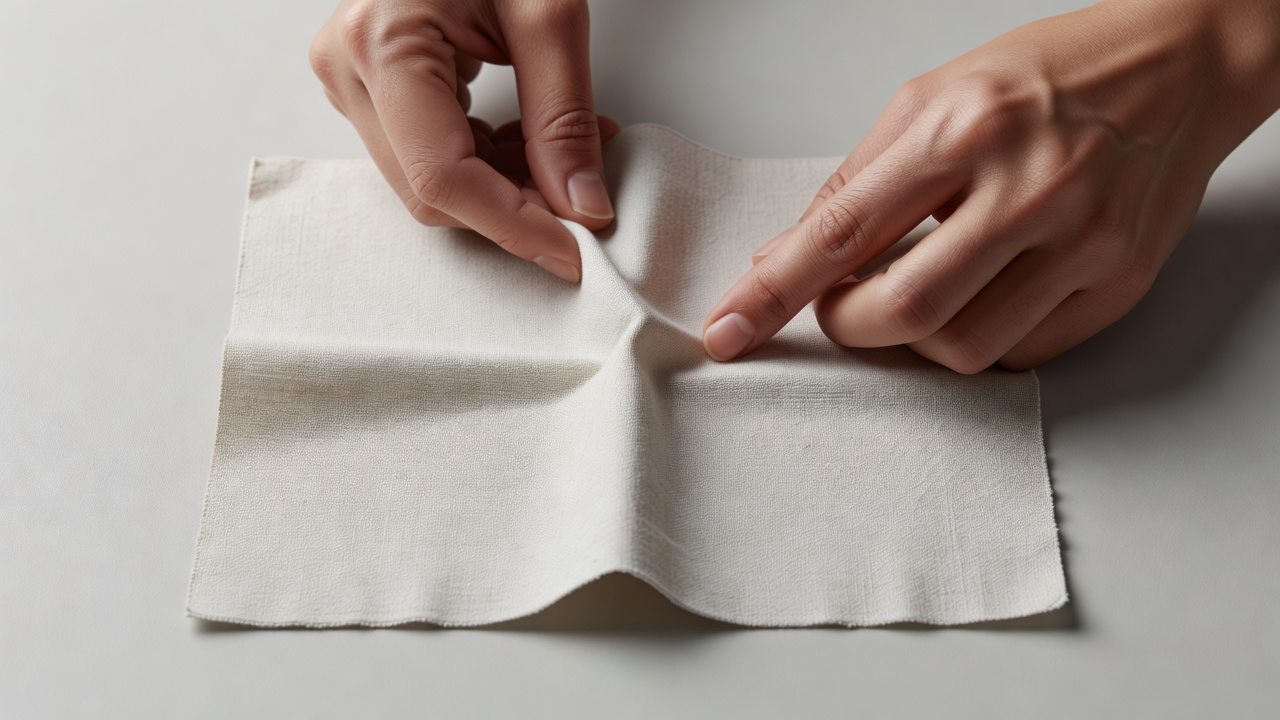
Denim swatches offer clear visual and tactile clues about weave structure and weight. These are general observations to guide your own swatch practice.
Look at the fabric surface at an angle. You should see a clear diagonal rib pattern running from lower left to upper right (in most denim). This is the twill weave.
Turn the swatch over. Traditional denim has a distinctly different appearance on the back — often lighter or uncolored compared to the front face.
Denim is often noticeably heavier than plain-weave cotton at similar visual density. Pick up the swatch and compare to lighter fabrics in your collection.
Pull the swatch gently in all directions. Traditional denim resists stretch, while stretch-blend denim will have noticeable elasticity in one or both directions.
Fold the denim firmly and press with your fingers. Notice how the crease holds — dense denim often retains a crease more firmly than lighter fabrics.
Rub the swatch firmly against a white cloth. Indigo-dyed denim may transfer some color. This is a normal characteristic of many raw or unwashed denims.